Protecting Flooring Materials in Storage
Flooring materials can represent a substantial investment, whether they are being held for a future project, retained as spare stock or temporarily moved away from an active site. Once materials enter storage, however, it is easy to assume that simply being indoors means they are protected. In reality, poor stacking, torn packaging, dust, moisture and repeated handling can all cause avoidable damage.
Protection is particularly important with higher-value timber products, where scratches, chipped edges or contaminated surfaces may affect material that would otherwise have been perfectly usable. Businesses providing wood flooring installation services also depend on flooring reaching the point of use in good condition, making careful handling and protection relevant long before individual boards are taken out of storage.
A good storage system therefore needs to do more than create space. It should minimise the opportunities for materials to be knocked, crushed, contaminated or exposed to unsuitable conditions while making stock straightforward to identify and retrieve.
Identify the Main Risks to Stored Flooring
Before arranging flooring in storage, consider what could realistically damage it.
Physical impact is an obvious risk. Corners and edges can suffer damage when packs are dropped, dragged or struck by other materials. Heavy objects stacked incorrectly can also place unnecessary pressure on flooring packs.
Moisture presents another concern, particularly where packaging becomes wet or flooring is stored close to a leak or damp surface. Dust and dirt can enter damaged or open packaging, while paint, adhesives and other building products may contaminate nearby materials if they spill.
Repeated handling is another easily overlooked source of damage. A flooring pack that is moved every week to reach something behind it has far more opportunities to be knocked or torn than one stored in a planned location.
Identifying these risks first makes it easier to design storage around preventing them.
Keep Protective Packaging Intact
Original packaging provides a useful first layer of protection against dust, dirt and minor contact damage.
Unless there is a specific reason to remove it, avoid unnecessarily opening flooring that is being kept as stock. Once packaging has been torn or discarded, exposed surfaces and edges can become more vulnerable.
Inspect packaging when materials enter storage. A small tear can often be noticed and addressed before repeated movement makes it worse. Packs showing significant damage or signs of moisture exposure should be assessed rather than simply placed on a shelf and forgotten.
Product labels should remain visible where practical. Being able to identify the manufacturer, range, finish, dimensions or batch without opening a pack reduces unnecessary handling.
If additional wrapping is used, take care not to create conditions contrary to the manufacturer's storage requirements. Protective packaging should complement product guidance, not replace it.
Prevent Edge and Impact Damage
Flooring is particularly vulnerable around edges and corners. Damage in these areas may occur long before the main surface shows any sign of a problem.
Avoid placing packs directly in busy walkways or beside doors where they are likely to be struck during loading and unloading. A designated flooring zone can reduce contact with unrelated equipment.
Do not use flooring packs as temporary work surfaces. Placing tools, fixings or heavy objects on top may scratch packaging, create pressure points or lead to items being dropped onto the material.
Care is also needed when using trolleys or other handling equipment. Moving a heavy pack efficiently is useful, but hitting a doorway, shelf or another stack can still damage the contents.
Simple protective measures are most effective when combined with careful handling rather than being treated as a substitute for it.
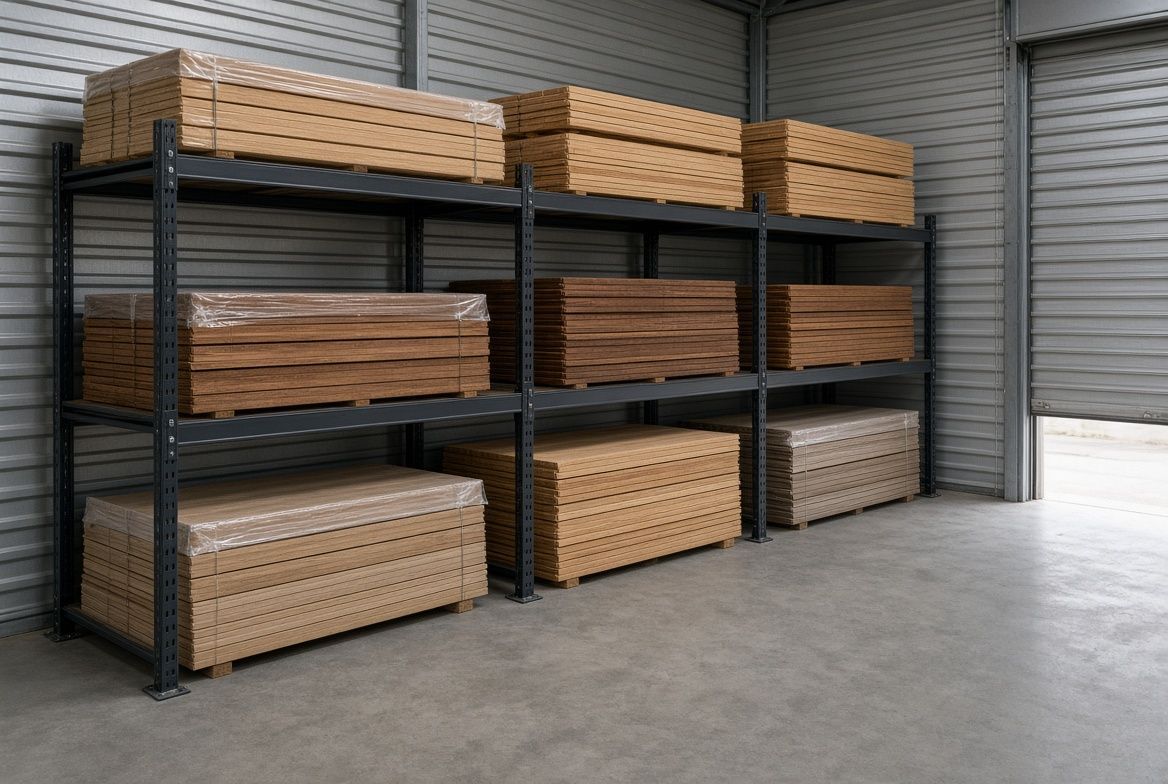
Stack Flooring Safely
Poor stacking can damage materials and create a safety risk.
Flooring should be supported appropriately and stored in accordance with the manufacturer's instructions. In general, packs should not be left in unstable piles or positioned where they could slide when another item is removed.
The surface underneath should be level and capable of supporting the load. If materials need to be raised from the floor, use a suitable stable method rather than balancing packs on improvised supports.
Avoid placing unrelated heavy materials on top simply because the flooring creates a convenient flat surface.
Stack height also matters. A tall pile may save floor area, but it becomes less practical if several heavy packs must be moved whenever the bottom one is required. Smaller, clearly identified groups can make retrieval easier and reduce unnecessary movement.
Keep Flooring Away From Moisture
Even in an enclosed storage area, flooring should be positioned with possible moisture exposure in mind.
Avoid storing materials immediately beside known water sources or anywhere that has signs of leaks or persistent damp. Packaging should be checked periodically for staining, softening or other indications that water may have reached it.
Materials should also be protected during transport into and out of storage. A well-protected pack can still become wet during a short journey from a vehicle if it is carried through heavy rain without adequate cover.
If packaging becomes wet, do not assume that the contents are unaffected simply because the outer surface later dries. Follow the product manufacturer's guidance and seek specialist advice where necessary before using potentially affected material.
Early action is preferable to discovering damage only when the flooring is eventually unpacked.
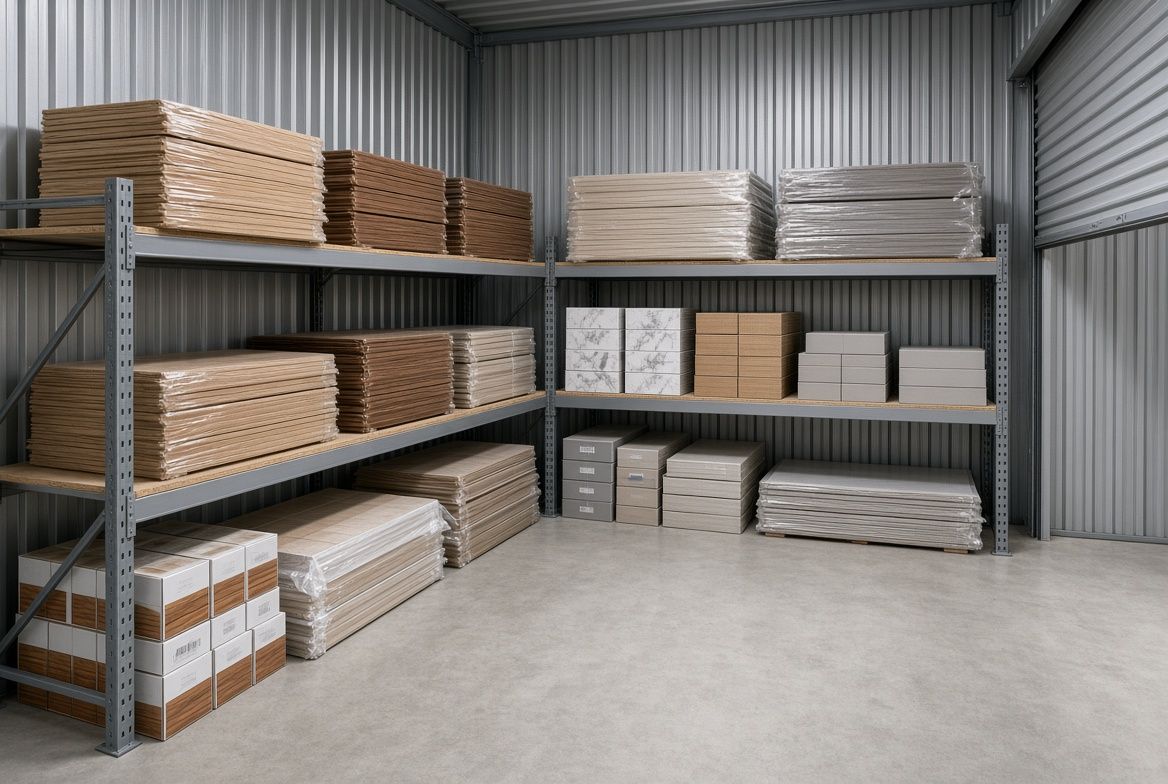
Control Dust and General Contamination
Building and decorating work can produce considerable amounts of dust. Fine particles can travel much further than expected and settle on stored materials, particularly when packaging has already been opened.
Keeping flooring away from cutting, sanding and other dust-producing activities reduces this exposure.
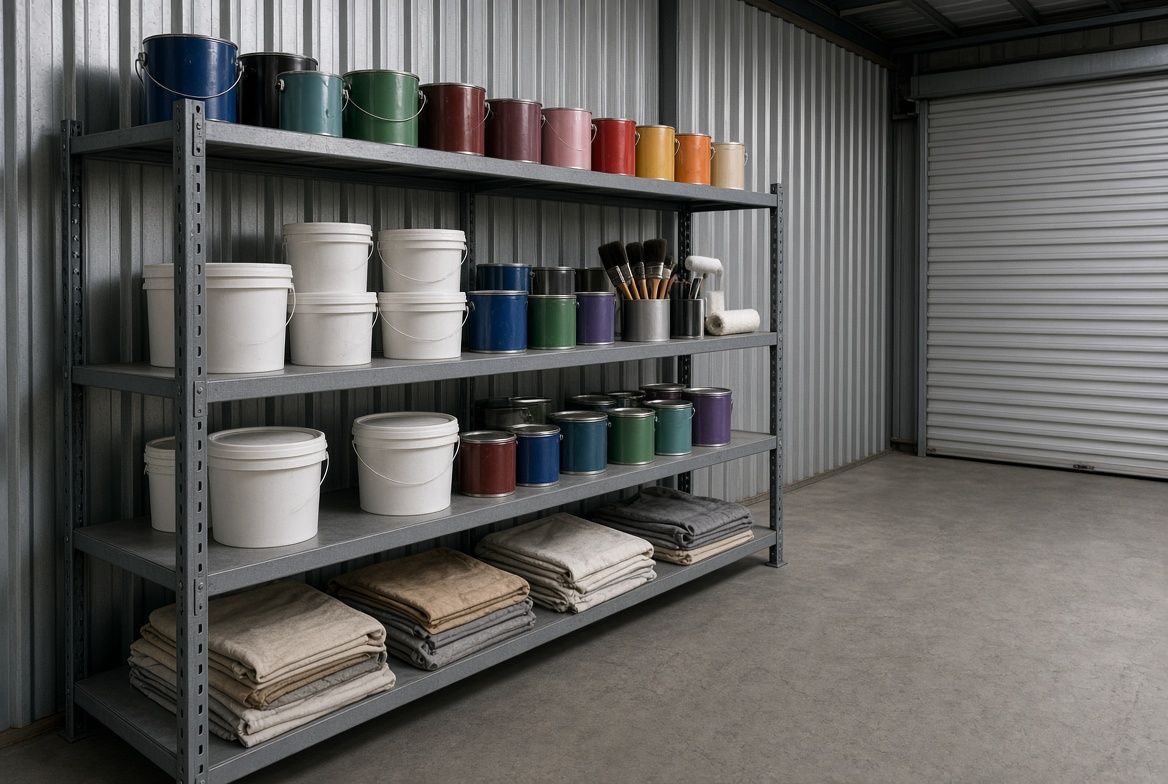
Where flooring is being stored alongside general building supplies, take particular care with products that could leak or spill. Paint, oils, adhesives and other liquids should not be positioned above flooring packs where a damaged container could contaminate valuable material underneath.
Food and waste should also be kept away from stored building products. A clean storage area is easier to inspect and less likely to attract pests or create unpleasant contamination issues.
Regular cleaning around stored materials helps prevent dirt building up to the point where every pack has to be cleaned before it can even be moved.
Separate Flooring From Other Building Materials
Mixed storage often causes problems because different materials are treated as though they have identical requirements.
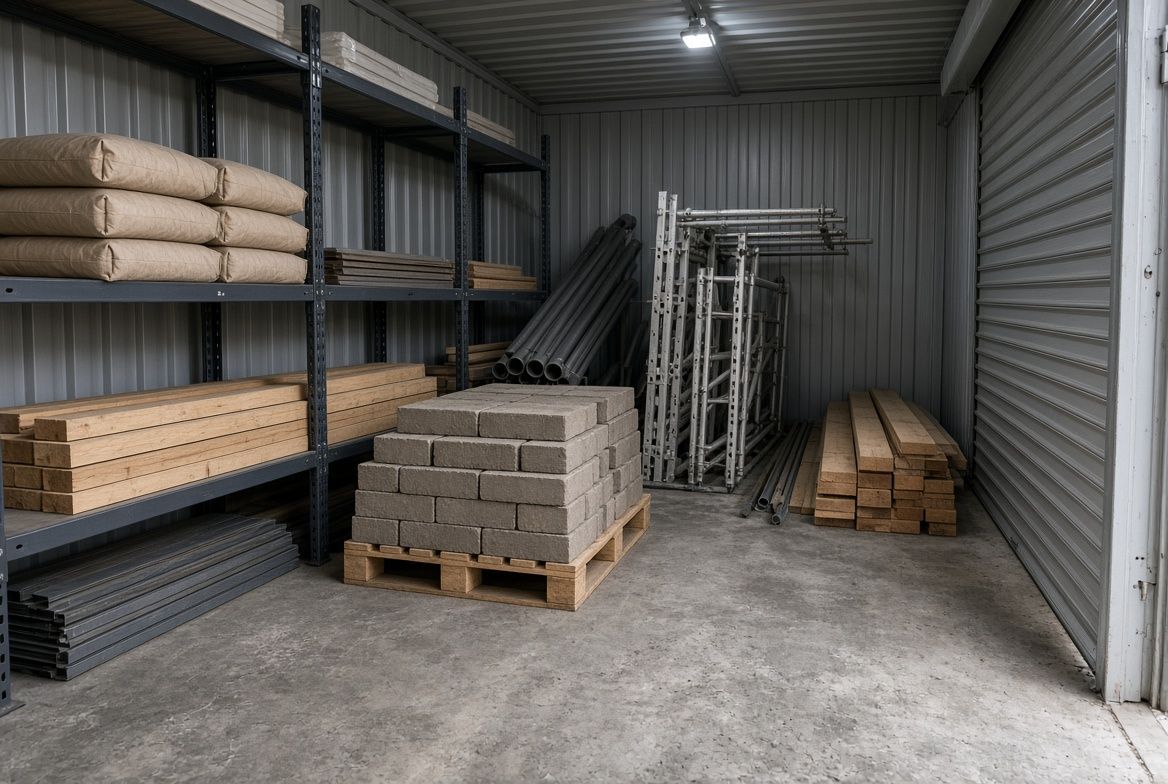
Flooring should ideally have its own defined area rather than being mixed among tools, decorating products, rubble, fixings and general site equipment.
Separation helps prevent accidental damage and makes inventory checks easier. It also reduces the likelihood of somebody moving flooring simply to reach an unrelated item.
Where several types of flooring are being held, divide them further by product, project or reference. Clear labels can prevent visually similar packs from becoming mixed.
If offcuts or spare boards are worth retaining, give them a dedicated location too. Loose pieces pushed between full packs can be difficult to identify and may themselves damage packaging.
Reduce Unnecessary Handling
Every time flooring is moved, there is an opportunity for something to go wrong.
A well-planned layout should allow required materials to be retrieved without repeatedly relocating unrelated packs. This is particularly important where flooring is heavy or awkward to handle.
Before placing stock into storage, think about when it is likely to be needed. Materials required soon should remain more accessible, while longer-term stock can occupy less prominent positions.
For businesses, installers or property professionals who need additional room for suitable project materials, storage units in Peterborough can help keep surplus stock away from crowded working areas. The space still needs to be organised carefully, however; moving materials into a larger unit does not protect them if they are subsequently stacked or handled poorly.
Where several people access the same space, establish a consistent system so that everyone knows where flooring should be returned and how packs should be handled.
Keep an Inventory of Flooring Stock
An inventory can reduce both unnecessary handling and wasted materials.
Record the type of flooring, quantity and storage location. Depending on the products involved, useful details might include finish, dimensions, product reference and batch information.
For materials allocated to a specific project, note that clearly. This helps prevent stock intended for one customer or property being removed for an unrelated job.
An inventory is particularly valuable for spare material retained after completed work. Keeping a small quantity can be useful for future repairs, but only if the business can identify and locate it later.
Review the inventory periodically and remove records for materials that have been used, transferred or disposed of.
Inspect Stored Flooring Periodically
Materials should not disappear into storage for months without being checked.
Periodic inspections provide an opportunity to spot torn packaging, unstable stacks, signs of water exposure or materials that have shifted. Problems found early may be easier to address before they affect additional stock.
Inspections also help identify materials that no longer need to be retained. Old project leftovers can gradually occupy significant space if nobody reviews whether they are genuinely useful.
The frequency of checks will depend on how long materials are stored and how often the area is accessed. A busy trade storage space may naturally be inspected more often than an area holding long-term reserve stock.
The important point is to make condition checks part of stock management rather than waiting until the flooring is needed.
What If Flooring Is Damaged in Storage?
If damage is discovered, separate the affected material from good stock so it is not accidentally taken to a project.
Photograph visible damage and retain product information where available. If the issue involves moisture, significant packaging damage or uncertainty about whether the flooring remains suitable for use, contact the manufacturer, supplier or an appropriate flooring professional.
Do not conceal damaged boards within otherwise usable packs. Clearly identifying affected material prevents somebody else from assuming the entire quantity is ready for use.
Minor packaging damage does not necessarily mean the flooring itself has been harmed, but it should still prompt an inspection rather than an assumption.
Protect the Material, Not Just the Storage Space
Keeping flooring indoors is only the beginning of effective material protection. Valuable stock can still be damaged inside a storage unit through poor handling, unstable stacking, contamination or neglect.
Good protection comes from controlling those everyday risks. Keep packaging intact, give flooring a dedicated area, prevent heavy objects from being placed on top and minimise how often packs need to be moved.
Cleanliness and regular inspections matter as well. Spotting a torn pack, water issue or unstable stack early can prevent a relatively minor problem from affecting more valuable stock.
When flooring is treated as an asset rather than simply another building material, storage becomes much more effective. The result is stock that remains organised, identifiable and better protected until it is needed.