Storage Solutions for Plumbing Tools & Materials
Plumbing businesses can accumulate a surprising amount of equipment. Hand tools, power tools, pipework, fittings, valves, sealants and spare components all need somewhere suitable to be kept between jobs. Without an organised system, useful stock can quickly become difficult to find, while tools may be exposed to unnecessary damage or deterioration.
This becomes particularly important for busy tradespeople working across several properties. The tools and materials required can vary considerably between routine repairs, maintenance work and larger plumbing projects. For plumbing specialists in Fulham, keeping equipment organised between jobs can make it easier to check available stock, prepare the right supplies and avoid carrying unnecessary materials from one property to the next.
A dedicated storage unit can provide additional space without turning a van, garage or workshop into an overcrowded stockroom. However, simply moving plumbing equipment into storage is not enough. How tools and materials are packed, arranged and checked can make a significant difference to their condition and accessibility.
Separate Tools, Fittings and Materials
One of the simplest ways to improve plumbing storage is to divide equipment into clear categories. Frequently used hand tools should not be mixed into boxes of spare fittings, while bulky pipework should have its own designated area.
A practical system might separate stock into categories such as hand tools, power tools, copper and plastic fittings, valves, fixings, consumables and replacement components. Labels should be easy to read without having to move several boxes first.
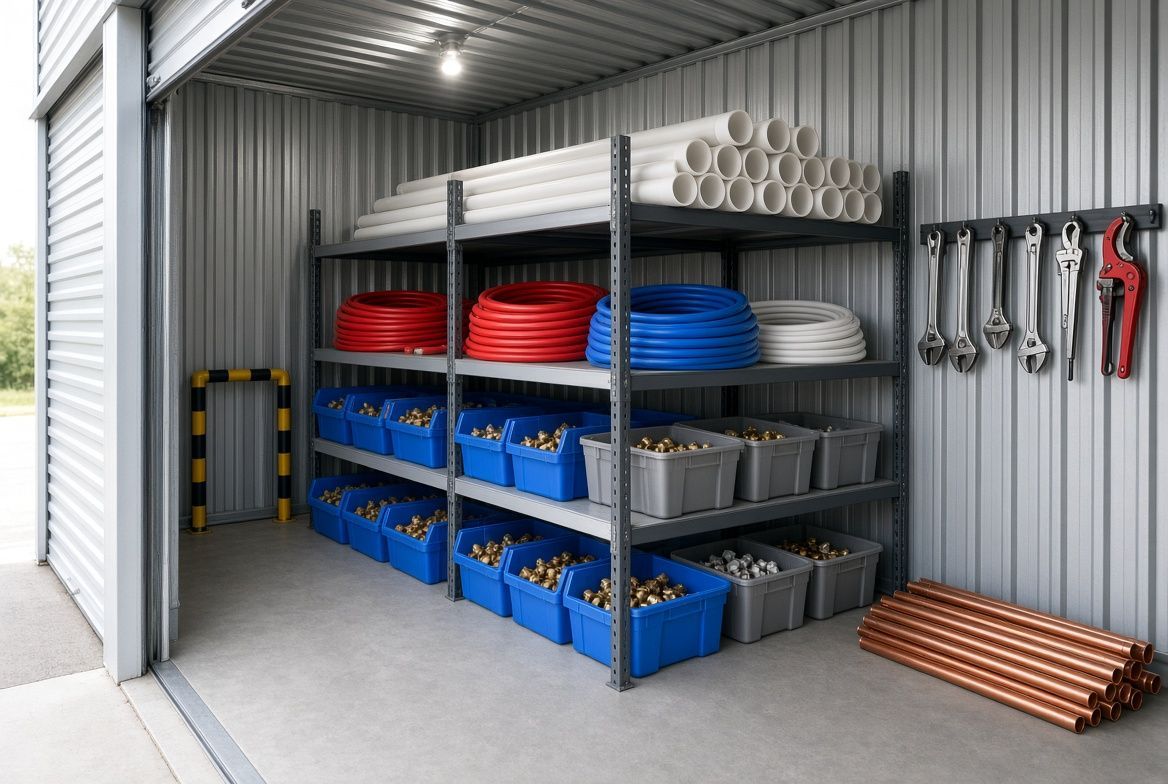
Transparent containers can be particularly useful for smaller components because their contents are visible at a glance. Alternatively, clearly labelled stackable containers can make better use of vertical space.
Organisation should reflect how equipment is actually used. Items that regularly leave the unit should remain near the entrance or in an accessible shelving area, while infrequently required stock can sit further back.
Protect Plumbing Tools From Damp and Damage
Good-quality plumbing tools represent a significant investment, so storage conditions matter. Metal hand tools can be vulnerable to corrosion when repeatedly exposed to moisture, while batteries and electrical equipment should be protected from unsuitable environmental conditions.
Tools should be cleaned and dried before being stored, particularly after jobs where they have been exposed to water. Putting damp equipment straight into closed toolboxes can trap moisture around metal surfaces.
Power tools should be stored in their cases where possible. Cases provide protection against dust and accidental knocks and make equipment easier to stack safely. Batteries should be stored according to the manufacturer's instructions, particularly where temperature and charging conditions are concerned.
Never assume that putting something inside a box automatically makes it suitable for long-term storage. Equipment should be inspected before it goes away and checked periodically if it will remain unused for an extended period.
Store Pipes and Longer Materials Correctly
Pipework creates a different storage challenge because long sections can take up considerable floor space if they are not organised properly.
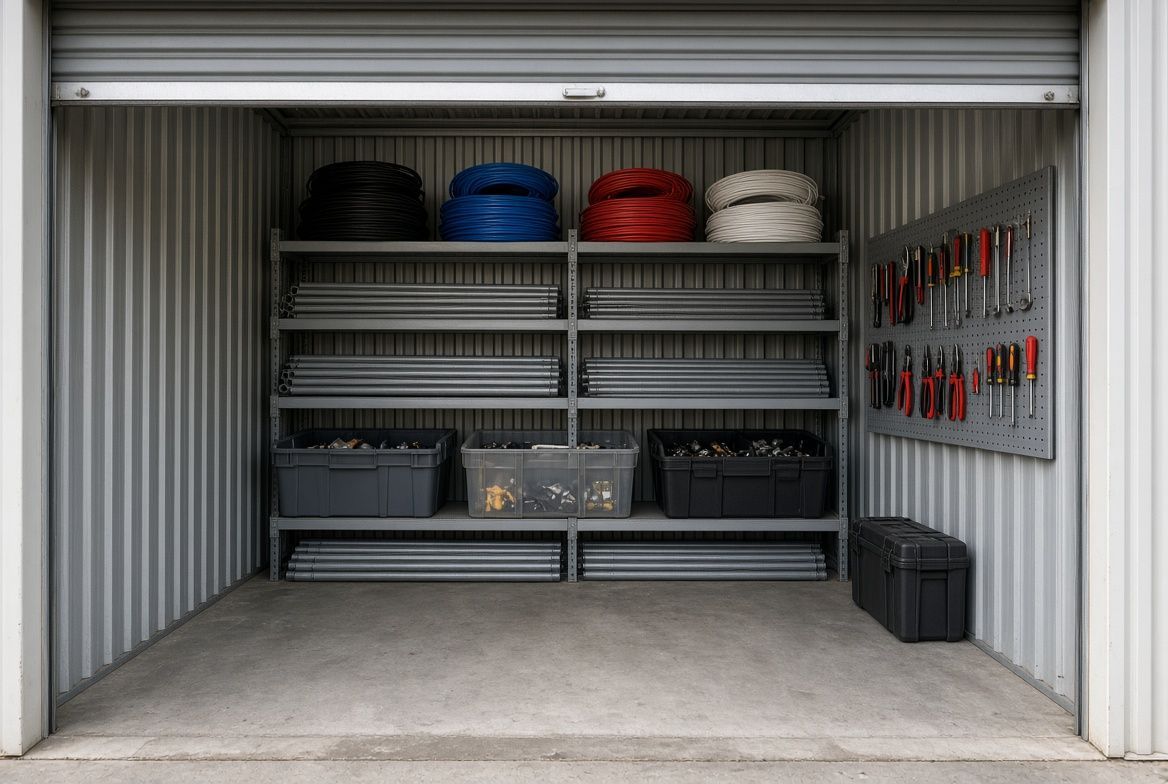
Suitable horizontal racks can keep longer materials together and off the floor. Pipe should be supported sufficiently to prevent unnecessary bending or distortion, and heavier materials should always be positioned with stability in mind.
Different pipe types and sizes should also be separated. Clear labelling helps prevent time being wasted sorting through similar-looking stock before a job.
Avoid creating unstable piles or leaning large quantities of material against shelving. Even relatively light materials can become hazardous if they slide or fall when someone is retrieving stock.
Organise Small Plumbing Components
Small components are among the easiest plumbing supplies to lose. Washers, clips, connectors, screws, valves and fittings can gradually disappear into mixed boxes, making it difficult to know what is actually in stock.
Compartment organisers and labelled containers solve much of this problem. Components can be divided by type and, where appropriate, by size.
For businesses holding substantial quantities, a simple inventory can make the system even more effective. This does not necessarily require sophisticated software. A spreadsheet or stock list showing the approximate quantity and storage location may be sufficient.
The objective is to make stored supplies genuinely usable. Saving a fitting from a previous project has little value if nobody can find it when it is eventually needed.
Give Expensive Equipment Extra Attention
Specialist plumbing equipment deserves additional consideration. Inspection equipment, testing instruments, press tools and other higher-value items should not be left loosely among general materials.
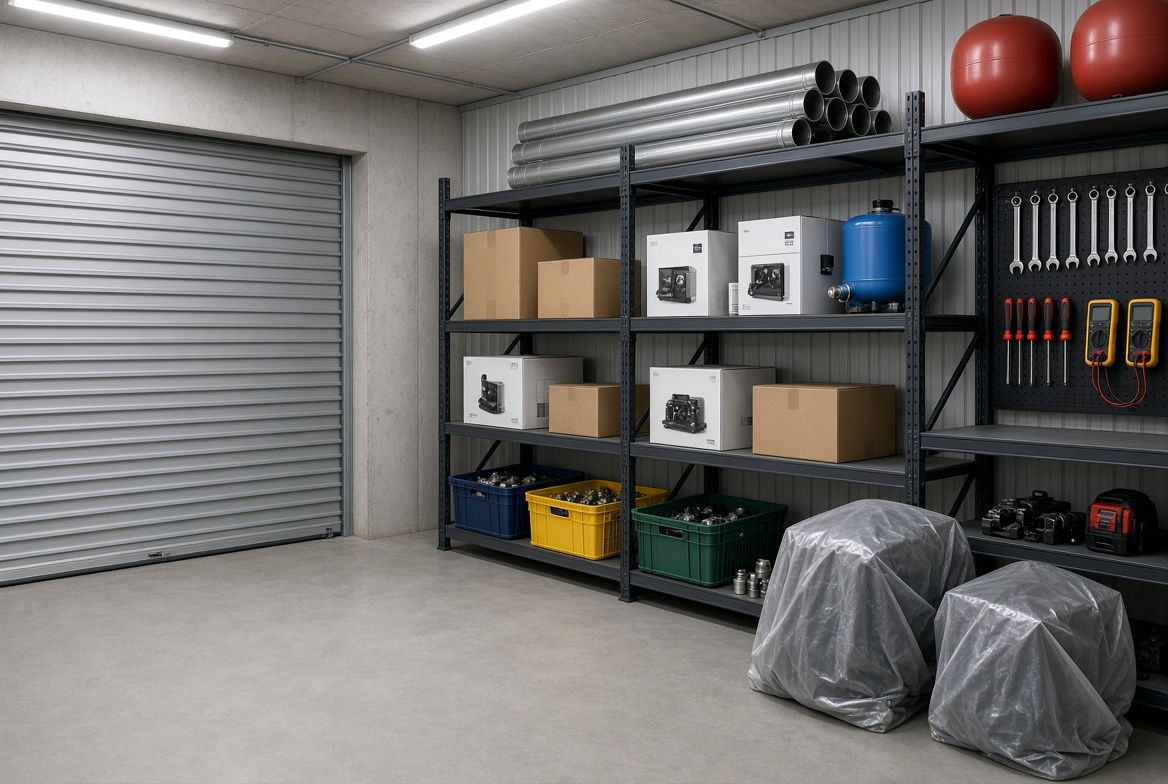
Where appropriate, keep specialist equipment in protective cases and assign it a specific shelf or storage area. Avoid placing heavy containers above delicate equipment, where a dropped box could cause expensive damage.
Manufacturer storage instructions should always take priority for specialist equipment. Certain products may have particular requirements concerning temperature, humidity, battery care or positioning.
A basic equipment register can also help businesses keep track of valuable assets. Recording what is stored and where it is located reduces the chance of equipment being forgotten or unnecessarily replaced.
Use Storage to Manage Stock More Efficiently
Additional storage space can make bulk purchasing and spare-stock management more practical, but more space should not become an excuse to accumulate unnecessary materials.
For tradespeople who have outgrown a garage, workshop or van, using self storage for business can provide dedicated space for tools and stock without requiring larger permanent premises.
Review stock periodically and distinguish between useful supplies and items that have little realistic prospect of being used. Keeping excessive obsolete stock occupies space that could be used for equipment needed regularly.
Consumables should also be checked for manufacturer-specified shelf lives and storage requirements. Adhesives, sealants, chemicals and similar products should never be treated like ordinary hardware simply because they are used by the same trade.
Where products carry safety information or specific storage instructions, follow the label and manufacturer guidance. A general self-storage unit may not be suitable for hazardous, flammable or otherwise restricted materials, so the storage provider's terms should always be checked before bringing such products onto the premises.
Create a Layout That Works Like a Small Stockroom
The best storage layout is not necessarily the one that fits the greatest number of boxes into the available space. Accessibility matters just as much.
Leaving a clear route through the unit means equipment can be reached without repeatedly unloading the contents. Shelving can make effective use of wall height while keeping boxes visible and accessible.
Frequently required stock should sit towards the front. Less frequently used items can be positioned further back, while heavy boxes should generally remain at lower levels to reduce lifting risks.
It can also help to map the unit into simple zones. For example, one side might contain tools and equipment while another holds fittings and general stock. A designated area for materials awaiting use can prevent new deliveries from becoming mixed with older supplies.
Make Security Part of the Storage Plan
For tradespeople, the contents of a storage unit can represent thousands of pounds of business equipment. Security should therefore be considered before choosing where to store it.
Look at the overall security arrangements provided at the facility rather than concentrating solely on the unit door. Access control, site management, lighting, CCTV and the construction of the units can all form part of the picture.
An inventory of higher-value tools is also useful. Keep model and serial number information where applicable, and consider maintaining photographs and purchase records separately. These records can help with asset management and may be useful when dealing with insurers.
Businesses should also confirm that their insurance arrangements provide suitable cover for equipment while it is stored away from their main premises.
Check and Rotate Stored Stock
Storage should be an active system rather than somewhere equipment disappears indefinitely. Regular checks help identify damaged packaging, deteriorating products and stock that is no longer required.
Older usable stock can be moved towards the front so it is considered before newer supplies. This is particularly important for products with manufacturer-defined shelf lives.
Periodic reviews also provide an opportunity to reorganise the unit as the business changes. A layout designed around today's stock may become inefficient if the type or volume of work changes over the next year.
Storage That Supports a More Organised Plumbing Business
For plumbers, additional storage can do more than free up space. Used effectively, it can create a central point for tools, replacement parts and job materials, helping reduce clutter in vehicles and making stock easier to manage.
The key is to approach the space as an organised working resource. Protect equipment appropriately, separate different categories of stock, maintain clear access and regularly review what is being kept.
A well-planned storage unit can then function much like a compact trade stockroom: equipment stays protected, materials are easier to locate and the right supplies can be collected when they are needed. For a busy plumbing business, that organisation can translate into less time searching for equipment and more efficient preparation for the next job.