Storing Timber Flooring Before Installation
Timber flooring needs more consideration before installation than simply finding an empty corner for the packs. Wood is a natural material that responds to the conditions around it, particularly changes in moisture and humidity. Poor storage before fitting can therefore create avoidable problems, even when the flooring itself is of good quality.
Preparation should begin before the flooring arrives. When purchasing from solid wood flooring specialists, it is worth checking the product-specific guidance for delivery, storage and acclimatisation so the flooring can be handled correctly from the outset. Requirements can differ between products, so general advice should never replace the manufacturer's or supplier's instructions.
The objective is to keep the boards protected and in appropriate conditions until they are ready to be fitted. That means thinking about the room environment, moisture, packaging and how packs are positioned rather than treating flooring like ordinary building stock.
Why Storage Conditions Matter for Timber
Wood is hygroscopic, meaning it can absorb and release moisture in response to its surroundings. As environmental conditions change, timber can consequently expand or contract.
That natural behaviour is one reason flooring needs to be stored and installed with care. Moving timber between substantially different environments without following the appropriate product guidance may expose it to conditions that affect its dimensions.
Solid timber deserves particular attention because the construction differs from engineered flooring. Different products can consequently have different requirements for storage and acclimatisation.
Rather than relying on a universal rule such as leaving every floor for a fixed number of days, check the instructions supplied with the particular flooring. The manufacturer's requirements should determine how the product is handled.
Check the Installation Environment Before Delivery
Ideally, the room where the flooring will be installed should be ready to receive it.
Wet trades can introduce substantial moisture into a building. Fresh plaster, screeds and other recently completed work may still be drying, so delivering timber flooring too early can expose it to an unsuitable environment.
The building should generally have reached the conditions required by the flooring manufacturer before acclimatisation begins. Heating and ventilation may also need to be operating as they normally will after occupation, depending on the product instructions.
Subfloor conditions matter too. Appropriate moisture testing should be completed as required before installation rather than assuming a surface is dry because it looks dry.
If the room is not ready, storing the flooring elsewhere may be preferable to leaving it on an active building site. However, the alternative location must itself provide conditions appropriate for the product.
Choose a Suitable Storage Location
A suitable storage area should be clean, dry and protected from weather and building-site activity.
Avoid locations where packs could be exposed to rain, leaks or persistent damp. Timber flooring should not be left outside, even if it is covered temporarily, unless the manufacturer specifically permits such storage.
Garages, sheds and unfinished outbuildings should not automatically be considered suitable either. Their temperature and humidity can differ considerably from the conditions inside an occupied property.
If flooring has to remain away from the installation property for a period, choose storage that protects it from weather and unnecessary handling. Once the product needs to acclimatise to the installation environment, follow the supplier's instructions about when and how it should be moved into the relevant room.
Storage and acclimatisation are related, but they are not necessarily the same stage of the process.
Keep Flooring in Its Packaging Where Required
It can be tempting to open every pack immediately after delivery, particularly when checking a large order. However, packaging requirements vary between flooring products.
Some manufacturers may instruct that packs remain sealed during part of the storage or acclimatisation period, while others may specify a different procedure.
Follow the instructions supplied with the flooring rather than opening packs based on general advice.
That does not mean ignoring the condition of a delivery. Check for obvious signs of transit damage, torn packaging or moisture exposure when the flooring arrives. If something appears wrong, photograph it and contact the supplier before proceeding.
Packaging should also remain identifiable where possible. Product references, batch information and other labels can be useful if questions arise before installation.
Stack Timber Flooring Properly
How flooring is positioned can be just as important as where it is stored.
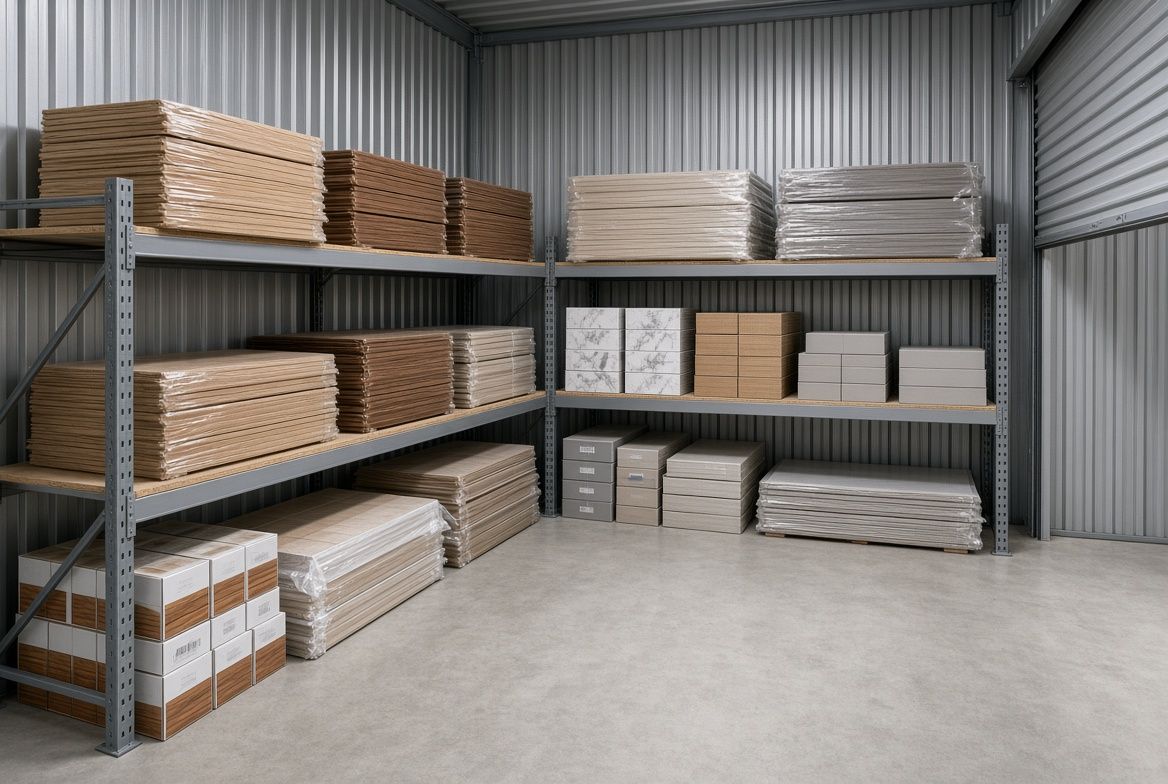
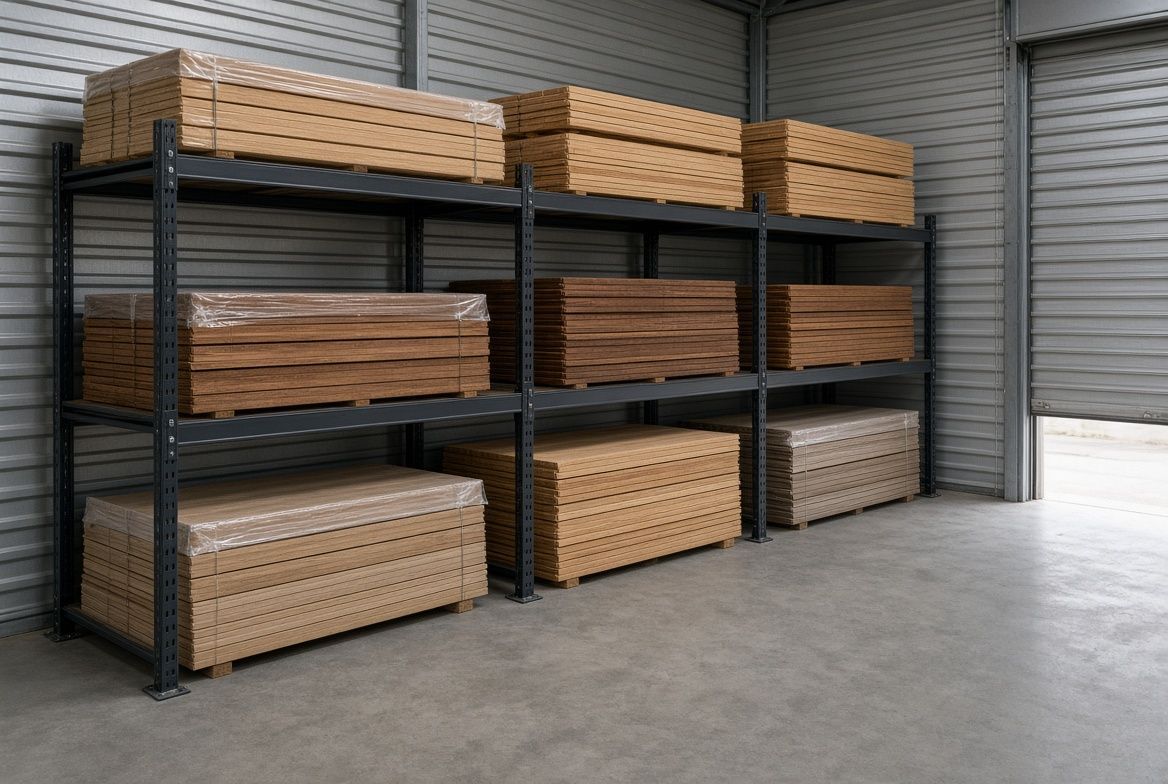
Packs should generally be kept flat and adequately supported, subject to the manufacturer's instructions. Leaning long packs upright against a wall can place them under unnecessary stress and may not provide the support intended for the product.
The supporting surface should be level and capable of taking the load. Avoid creating excessively high or unstable stacks simply to save floor space.
Packs should also be positioned where they will not need to be repeatedly moved to access other materials. Every unnecessary movement creates another opportunity for corners or packaging to be damaged.
Where the manufacturer requires airflow around packs, follow its specified arrangement rather than improvising gaps or removing packaging unnecessarily.
Understand Acclimatisation Rather Than Guessing
Acclimatisation is often discussed as though there were one rule for every timber floor. There isn't.
The appropriate process depends on factors including the type of flooring, its construction, moisture content, installation environment and manufacturer's requirements. Solid wood and engineered products should not automatically be treated in exactly the same way.
The safest approach is therefore product-specific.
Where acclimatisation is required, it generally involves allowing the flooring to adjust to appropriate conditions in the property before fitting. This does not mean leaving packs in any available room for an arbitrary number of hours.
Conditions should be suitable and reasonably representative of those expected when the room is in normal use.
Professional installers may also take moisture readings and assess site conditions before fitting. These checks provide more useful information than relying solely on the number of days since delivery.
Protect Flooring From Moisture
Water is an obvious concern, but visible leaks are not the only potential source of moisture.
Floors, walls and recently completed building work may retain moisture even when surfaces appear dry. Condensation and unsuitable humidity can also affect storage conditions.
Keep flooring away from known damp areas and do not place it where cleaning water, plumbing work or other site activities could expose the packaging to moisture.
If flooring arrives with packaging that appears wet or shows signs of water exposure, do not simply allow it to dry and assume the boards are unaffected. Record the condition and seek advice from the supplier.
Moisture-related decisions should be based on appropriate measurements and product guidance rather than visual judgement alone.
What If Installation Has Been Delayed?
Building projects do not always run to schedule. Flooring may arrive only for another trade to overrun or for installation to be postponed.
When a delay becomes significant, leaving expensive flooring in the middle of an active site may be unnecessary. Dust, ongoing work and repeated movement around the packs can increase the chance of problems before fitting even begins.
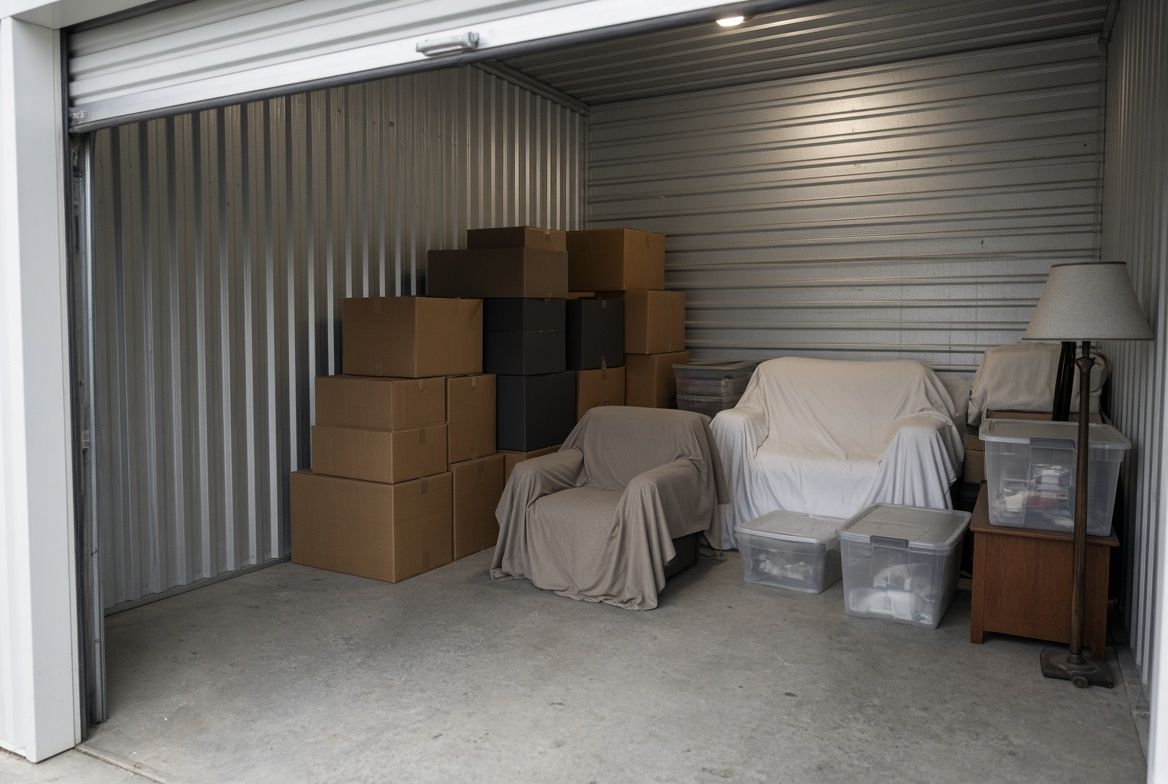
Where suitable for the product and its storage requirements, secure storage in Peterborough can provide additional space while a project is waiting to progress. The flooring would still need to be moved to the installation environment at the appropriate stage and acclimatised in accordance with the manufacturer's instructions.
The distinction is important: off-site storage can help keep materials away from site activity, but it does not replace any required acclimatisation at the property.
If a delay occurs after acclimatisation has already begun, seek advice before moving the flooring between substantially different environments.
Check the Flooring Again Before Installation
Storage is only one part of preparation. Flooring should be checked again before fitting begins.
Look for damaged packs, visible defects or signs that the material may have been exposed to unsuitable conditions. Installers should also carry out the site and moisture checks appropriate to the flooring system.
Confirm that the subfloor is ready and that any underfloor heating has been prepared in accordance with the relevant flooring and heating-system instructions.
It is also sensible to check that all required materials are available before opening multiple packs. Discovering halfway through preparation that an essential component is missing can create unnecessary delays and additional handling.
Any concerns about the condition of the timber should be resolved before installation rather than after boards have been fitted.
Common Storage Mistakes to Avoid
Many storage problems are preventable. One common mistake is delivering flooring before the property is sufficiently dry or ready for it.
Another is assuming that a garage or shed is automatically appropriate simply because it is enclosed. An enclosed space can still experience unsuitable environmental conditions.
Other mistakes include leaning packs vertically without approval, placing them on an uneven surface, exposing them to active building work and disregarding damaged packaging.
Perhaps the biggest mistake is applying generic internet advice to every timber product. Recommendations about how long flooring should acclimatise, whether packs should be opened and how they should be arranged can vary.
Product-specific instructions should always take priority.
Give Timber Flooring the Right Start
Correct storage cannot compensate for poor installation, but poor storage can undermine the preparation that goes into a quality floor.
Plan where the flooring will go before it arrives, keep it protected from unsuitable conditions and avoid unnecessary handling. Most importantly, follow the guidance supplied for the specific product rather than assuming all timber flooring behaves identically.
When the installation date approaches, make sure the property and subfloor are ready and complete the required acclimatisation and moisture checks.
Taking those precautions helps ensure timber flooring reaches installation in the condition intended, giving both the material and the installer a better starting point for a successful finished floor.