Secure Storage: What to Look for in Locks for Storage Units
When placing belongings into self storage, security is naturally one of the first considerations. CCTV, controlled access and the construction of the facility all matter, but the lock securing an individual unit can also form an important part of the overall security arrangement. Choosing one should involve more thought than simply buying the first padlock that fits.
The right option depends on the locking mechanism, the unit itself and any requirements set by the storage provider. Advice from experienced locksmith and security specialists can also be valuable when comparing locking products or deciding what level of protection is appropriate. A lock should suit its intended application rather than being selected solely because it looks substantial.
It is equally important to remember that a lock works as part of a wider security system. Even a high-quality lock cannot compensate for weak surrounding hardware or poor site security, so customers should consider the complete storage arrangement.
Check the Storage Provider's Requirements First
Before buying a lock, ask the storage provider what type of locking system the unit uses and whether there are restrictions on the locks customers can fit.
Storage units differ. Some are designed for a particular type or size of padlock, while other facilities may use integrated locking arrangements or specify particular requirements.
Buying a lock before checking these details can result in one that is physically too large, too small or incompatible with the locking point.
The provider may also have recommendations based on the design of its units. Those recommendations are worth considering because a lock that performs well in one application may be unsuitable in another.
Never modify the unit, locking mechanism or surrounding hardware without the storage provider's permission.
Understand the Main Types of Padlock
Several types of padlock may be encountered when looking at storage security.
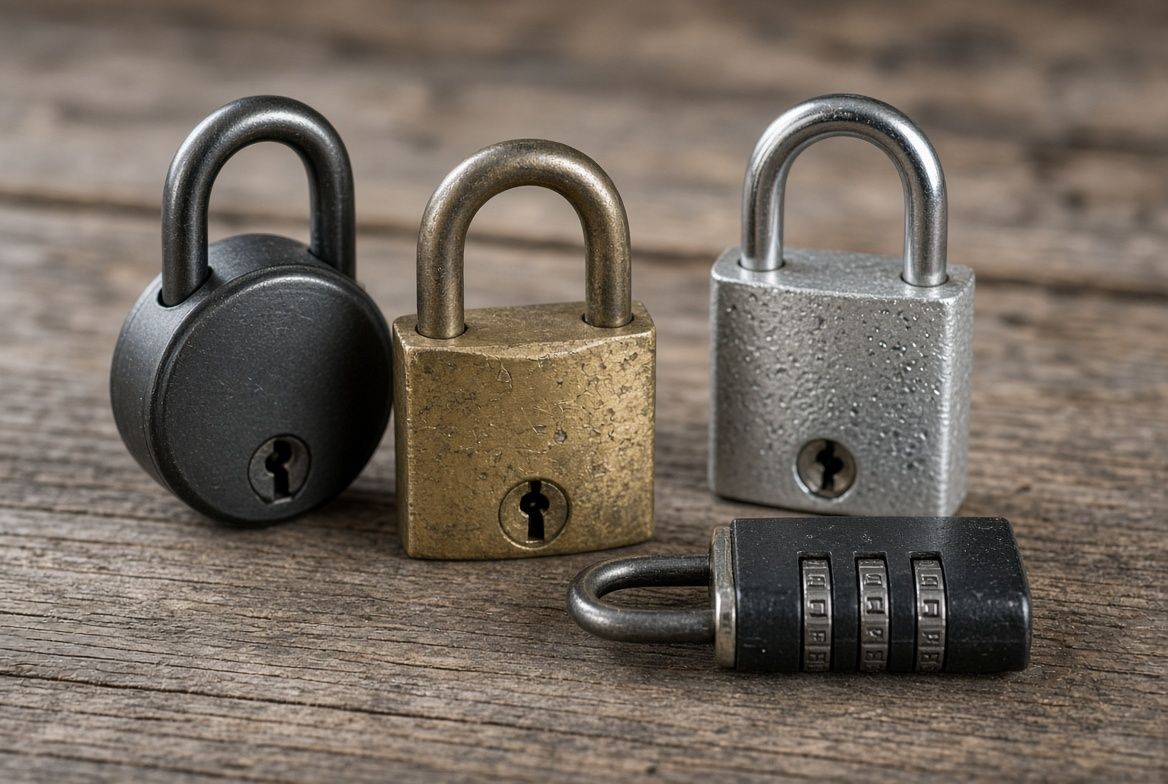
Traditional open-shackle padlocks have a visible curved shackle. They are widely available and easy to use, but the amount of exposed shackle can vary considerably between models.
Closed-shackle or shrouded padlocks are designed so that more of the shackle is protected by the lock body. Depending on the storage-unit locking arrangement, this can reduce the amount of exposed metal available to attack.
Disc or discus-style locks use a rounded body with relatively little exposed shackle. They can work well with some storage locking points, but compatibility needs to be checked.
There are also specialist locks intended for particular containers or locking mechanisms.
No single design is automatically best for every storage unit. Compatibility with the actual locking point should come before assumptions based on appearance.
Make Sure the Lock Fits Correctly
A strong lock is of limited value if it does not fit the unit properly.
The shackle needs to pass through the locking point while leaving as little unnecessary movement or exposure as practical. A lock that is excessively loose may not provide the arrangement intended by either its manufacturer or the storage provider.
Conversely, a lock that is too large may not engage correctly, while one that is too small may simply not fit.
Check dimensions before purchasing. If the storage provider specifies a maximum shackle diameter, lock style or other measurement, follow that requirement.
The locking point itself should also close correctly before the padlock is fitted. If anything appears bent, damaged or unusually loose, report it to the storage provider rather than attempting a makeshift repair.
Consider Resistance to Physical Attack
Security products vary significantly in their construction.
When comparing locks, look beyond packaging terms such as “heavy duty”. Consider the materials used, the amount of shackle exposed and whether the product has been independently tested or certified to an appropriate recognised standard for its intended application.
Hardened components and designs that reduce access to vulnerable areas can offer advantages, but specifications should be assessed as a whole.
The surrounding hardware matters as well. Security is only as effective as the combination of the lock, locking point, door and wider facility arrangements.
If particularly valuable belongings are being stored, obtaining advice on an appropriate lock may be preferable to trying to judge security solely by price or appearance.
Think About Outdoor Conditions
Where storage units are accessed outdoors, locks may be exposed to rain, moisture, dirt and changing temperatures.
A lock intended for this environment should be suitable for outdoor use. Corrosion can affect both appearance and operation, while dirt entering the mechanism may make a poorly maintained lock difficult to use.
Check the manufacturer's specifications for weather resistance and maintenance. Protective features can be useful, but no lock should be assumed to require zero maintenance indefinitely.
If a key becomes difficult to turn or a mechanism begins sticking, do not force it. Follow manufacturer guidance or seek professional advice before the problem becomes severe enough to prevent access.
Keyed or Combination Lock?
Both keyed and combination locks offer convenience in different circumstances.
A keyed lock is straightforward, but the keys need to be managed carefully. Losing the only key can create an obvious access problem, while attaching information that identifies the storage facility to the keyring may create an unnecessary security risk.
Combination locks remove the need to carry a physical key, but the code must remain confidential. Avoid obvious combinations and do not share the code more widely than necessary.
For business storage, think about how many people genuinely need access. Informally passing keys or combinations between numerous employees can make access difficult to control.
Whichever system is chosen, security depends partly on how responsibly access credentials are managed.
Manage Spare Keys Properly
Having a spare key can be sensible, but where it is kept matters.
Do not leave spare keys inside a vehicle simply because that vehicle is normally used to visit the storage facility. Similarly, avoid labelling a key with the storage company's name, unit number and other information that would make its purpose immediately obvious if lost.
Businesses should know who holds keys and recover them when an employee no longer requires access.
If a key is lost in circumstances that could compromise security, consider whether the lock should be replaced rather than relying indefinitely on the remaining copy.
For combination locks, change the code when there is a genuine reason to believe it has become known to someone who should no longer have access.
Look at Security Beyond the Padlock
The lock on the individual unit is only one layer of protection.
When choosing storage, consider how the wider facility controls access and monitors the premises. CCTV, lighting, site access arrangements, unit construction and management procedures can all contribute to the overall security picture.
For example, Peterborough Storage describes its secure storage facility in Peterborough as purpose-built, with 24/7 security systems and modern security technology alongside clean, weatherproof containers.
This wider view is important. A customer should not have to rely on the padlock alone as the entire security strategy.
Ask the provider how access works, who can enter the site and what security arrangements are in operation. Understanding these measures gives useful context when deciding whether a facility is appropriate for the belongings you intend to store.
Match Security to What You Are Storing
Not every storage customer keeps the same type or value of belongings.
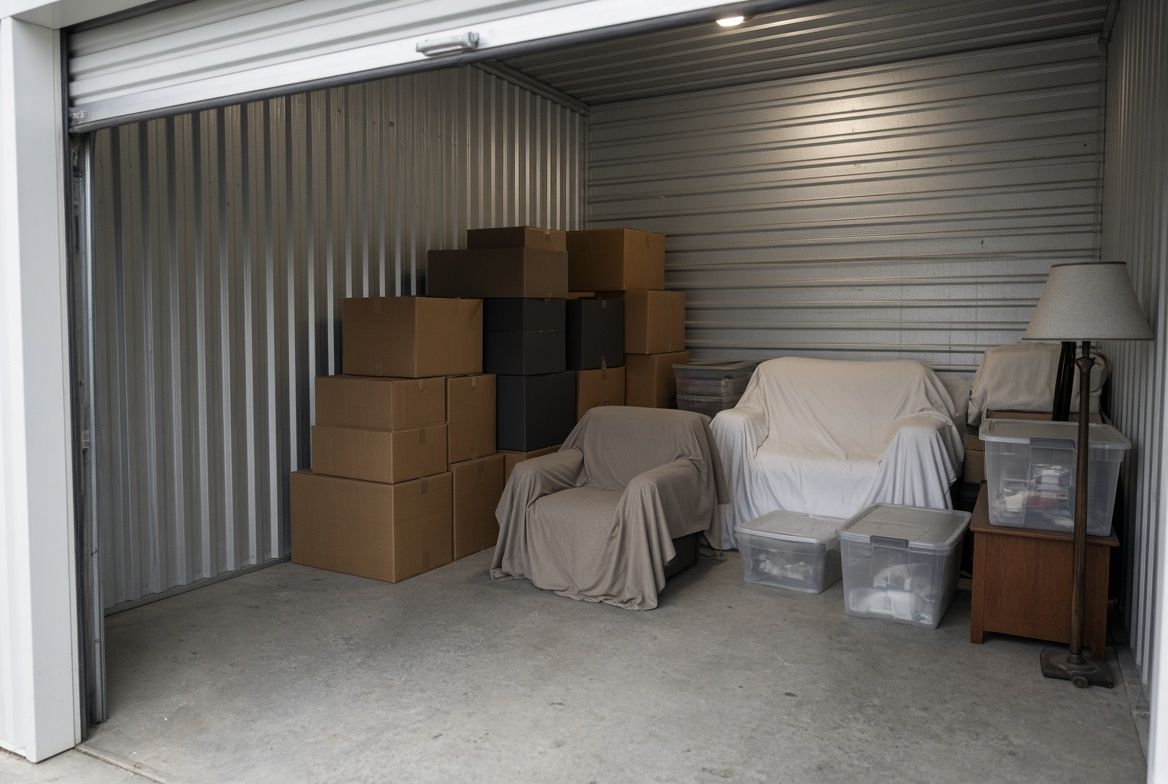
Someone storing ordinary household furniture during a move has different considerations from a business storing expensive tools or commercial equipment. The appropriate security decisions should reflect what is actually inside the unit.
Keep an inventory of higher-value possessions and retain purchase information, serial numbers or photographs where appropriate. These records should be kept somewhere separate from the storage unit.
Insurance should also be considered independently. Do not assume that belongings are automatically covered simply because they are secured inside a storage facility.
Check the terms of any relevant policy, including requirements concerning locks or security arrangements.
Inspect the Lock During Regular Visits
A storage lock should not be fitted and then ignored for years.
When visiting the unit, take a moment to check that the lock operates normally and shows no obvious signs of damage, unusual wear or corrosion.
Inspect the surrounding locking point as well. If something looks different from your previous visit, raise it with the storage provider.
Follow the lock manufacturer's maintenance instructions rather than applying unsuitable lubricants or attempting modifications yourself.
If the lock becomes increasingly difficult to operate, address the issue before it fails completely. Replacing a deteriorating lock at a convenient time is considerably easier than discovering that it will not open when you urgently need something from the unit.
Avoid Common Lock-Buying Mistakes
Price alone should not determine which lock protects a storage unit.
An inexpensive lock may not provide the level of protection you want, but simply buying the largest or most expensive model does not guarantee suitability either.
Another mistake is focusing on the lock while ignoring compatibility. A high-specification padlock that fits poorly is not necessarily a better choice than an appropriate product designed for the locking arrangement.
Customers should also avoid sharing keys or combinations unnecessarily, failing to keep a spare securely and neglecting locks that are showing signs of deterioration.
Most importantly, do not assume that the individual padlock is the only security feature worth investigating.
Choose Security as a Complete System
A suitable storage lock should fit correctly, be appropriate for its environment and provide a level of security proportionate to what is being protected.
Start by checking the storage provider's requirements, then compare compatible lock types and their specifications. Consider durability, exposed components, key or combination management and any recognised testing relevant to the product.
At the same time, assess the facility around the unit. Access controls, surveillance, site management and the physical construction of the storage area all contribute to security.
Taking this broader approach makes more sense than relying on one impressive-looking padlock. The strongest storage arrangements use multiple layers of protection, with the individual unit lock forming one important part of the overall system.