Storage Solutions for Building Site Materials
Building projects rarely involve materials arriving in exactly the order they are needed. Deliveries may come early, several trades may be working simultaneously, and products intended for later stages can end up occupying valuable space on site. Without a clear storage plan, materials can become difficult to locate, unnecessarily handled or exposed to conditions that increase the risk of damage.
Material management is therefore an important part of project logistics. Experienced building contractors working across refurbishment, extension, new-build and commercial projects may need to coordinate numerous products before they are ready to be used. Keeping suitable materials organised away from congested working areas can make it easier to control stock and bring supplies onto site when the relevant stage of work begins.
Off-site storage can be useful in these circumstances, but it should form part of the project plan rather than becoming somewhere surplus materials are deposited without a system. Different building products have different handling requirements, and not everything used on a construction project is suitable for an ordinary storage unit.
Decide What Actually Needs to Be Stored
Before moving building materials into storage, determine whether keeping them off site serves a practical purpose.
Products intended for later phases of a project are obvious candidates. There may be little benefit in keeping second-fix items in a busy working area while structural or early-stage work is still taking place.
Surplus materials that are likely to be used on another project may also be worth retaining. However, keeping every leftover product indefinitely can quickly consume valuable space.
Consider when each item will be needed, how difficult it is to replace and whether its storage requirements can be met. This helps distinguish useful project stock from materials that are simply being kept because nobody has decided what to do with them.
A simple review before materials enter storage can prevent the unit becoming filled with unidentified leftovers.
Protect Materials From Weather and Moisture
One of the main advantages of enclosed storage is protection from direct exposure to the weather, but materials still need to be stored appropriately inside.
Products should arrive dry and in suitable condition. If packaging has already become wet on site, moving it indoors does not necessarily resolve the problem. The contents may need to be inspected and manufacturer guidance followed.
Avoid placing moisture-sensitive products directly against surfaces where there is evidence of damp or water ingress. Packaging should also be checked periodically, particularly when materials will remain stored for a significant period.
Weather protection during transport matters too. Materials can be carefully stored for weeks and then exposed to heavy rain while being transferred onto a vehicle.
Plan collections with the same care as long-term storage so products remain protected until they reach the site.
Keep Materials Organised by Project or Trade
A mixed pile of construction materials quickly becomes difficult to manage.
Where one storage space serves several projects, divide materials by job and label them clearly. Within each project area, further separation by trade or phase can make collections easier.
For example, electrical products, plumbing supplies, joinery items and finishing materials should not all be placed into an unidentified group simply because they belong to the same project.
Labels should contain enough information for workers to identify the material without repeatedly opening boxes. Project references can be particularly useful where similar products have been purchased for different sites.
Avoid displaying unnecessary customer information on labels. Internal project codes or site references can usually provide sufficient identification.
Store Timber and Sheet Materials Carefully
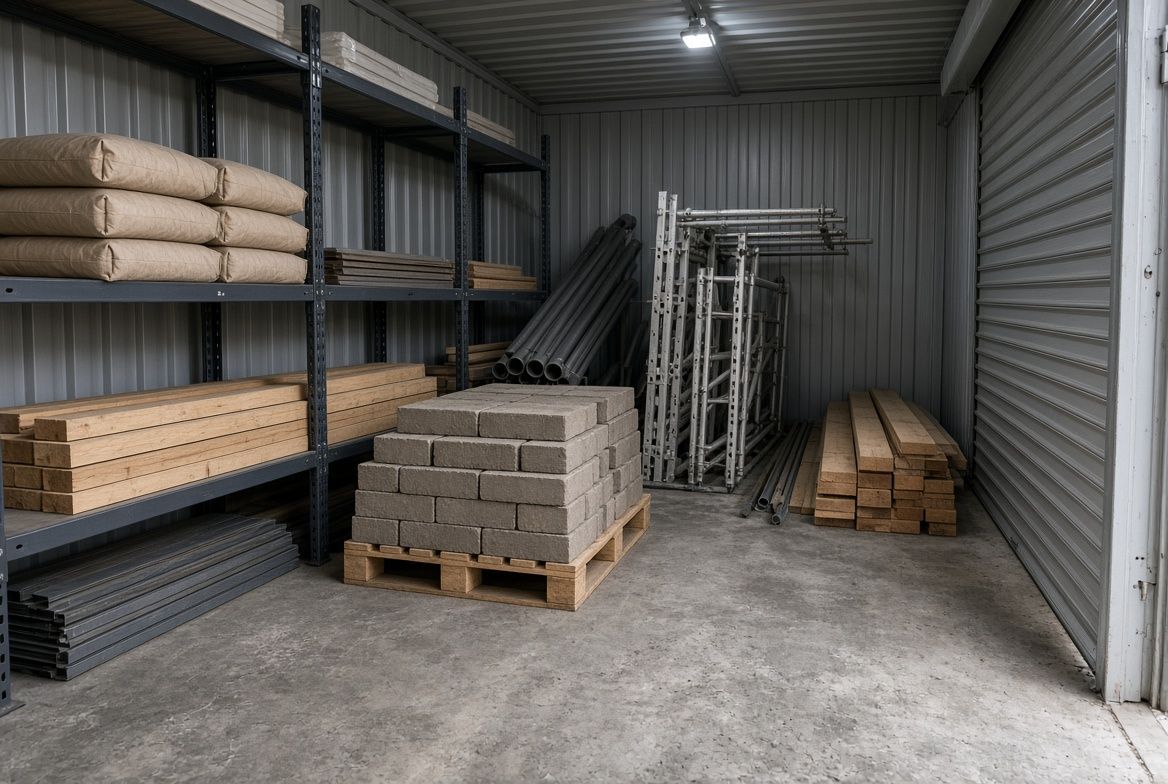
Timber, boards and sheet products can be awkward to store because of their dimensions.
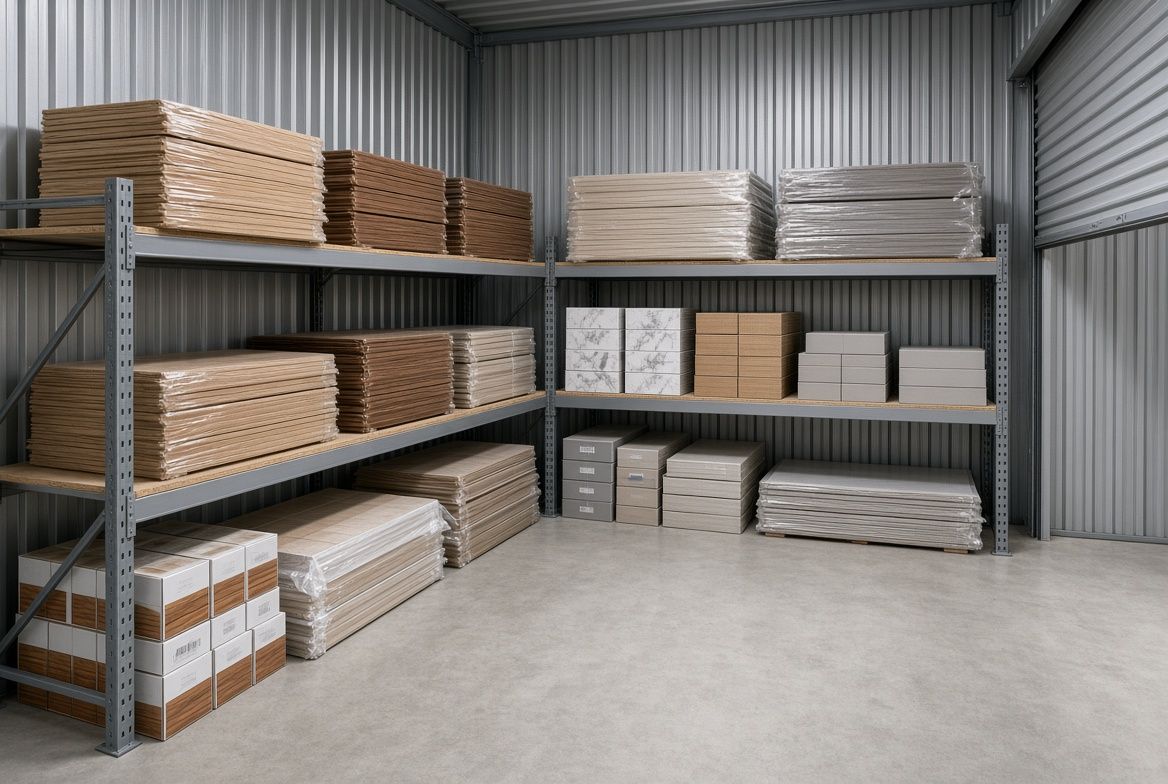
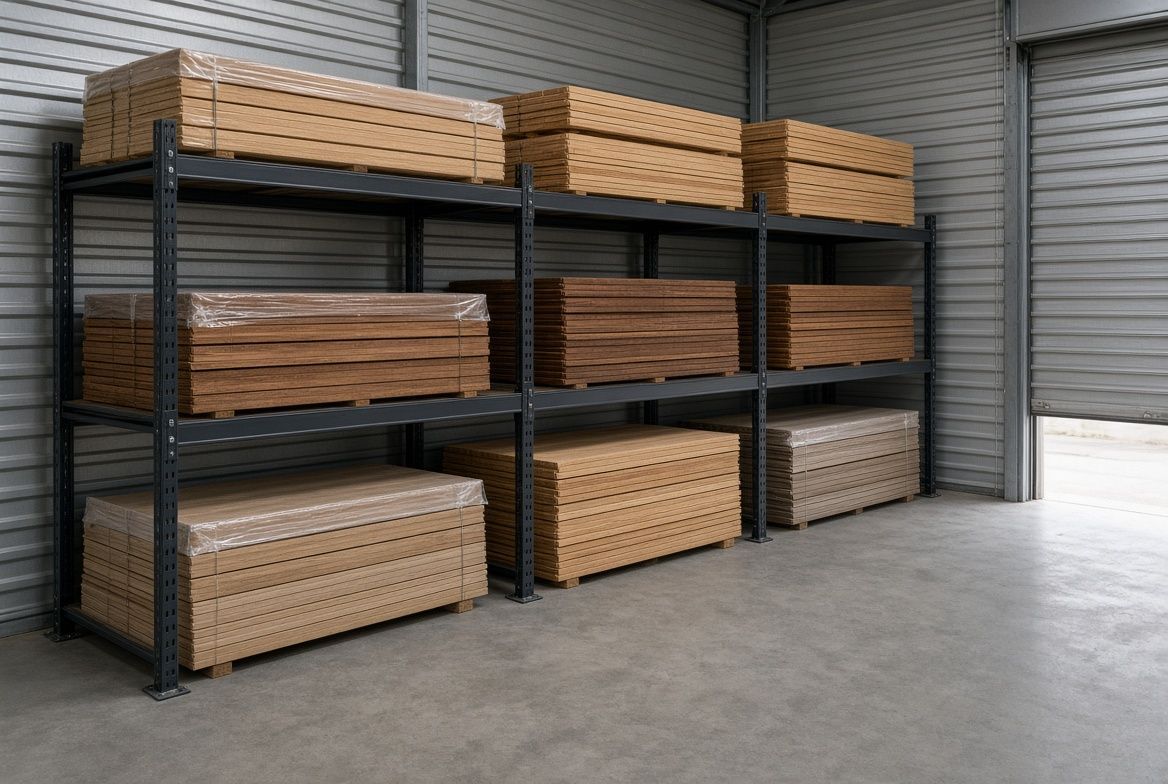
They need suitable support and should be handled according to the manufacturer's recommendations. Poor positioning can lead to distortion, edge damage or unstable stacks.
Avoid leaning large quantities of sheet material casually against walls, particularly where they could slide or become difficult to retrieve safely.
Flat storage may be appropriate for some products, provided there is adequate support and the manufacturer's guidance permits it. Heavy items should not be stacked on top of materials that could be crushed or marked.
Timber products may also have particular moisture and environmental requirements. These should be checked for the specific material rather than assuming that all wood-based building products can be stored under identical conditions.
Give Finished Products More Protection
Not every building material is equally tolerant of knocks and scratches.
Finished joinery, sanitaryware, doors, ironmongery, tiles and decorative products can be particularly vulnerable once they have reached the project. Keep protective packaging in place where appropriate and avoid using boxes containing finished products as temporary shelves or work surfaces.
Fragile materials should have a defined storage area away from heavy tools and frequently moved stock. Clearly marking fragile packages can also help other people using the unit understand that they require additional care.
If items need to be opened for inspection, make sure they are protected again afterwards. Packaging that has been removed and discarded cannot protect a product for the remainder of its time in storage.
Think About Weight as Well as Available Space
Construction materials can be extremely heavy, so the fact that something physically fits into a space does not automatically mean it has been stored appropriately.
Heavy materials should be positioned where they can be handled safely. Avoid creating tall, unstable stacks simply to maximise capacity.
Shelving must be suitable for the loads placed on it. Lightweight domestic shelving may not be appropriate for boxes of tiles, fixings or other dense construction products.
Consider how materials will eventually leave the unit as well. If several heavy items must be moved to retrieve one box at the back, the layout is likely to create unnecessary handling.
Keeping heavier stock closer to an accessible loading area can make collection more straightforward, provided it does not obstruct walkways or access to other materials.
Separate Fragile and High-Value Materials
Some project materials warrant their own protected area because of either their value or vulnerability.
Decorative fittings, specialist equipment and bespoke items should not be placed beneath general building stock where they could be crushed. Similarly, fragile products should be kept away from routes used to move heavy materials.
Where possible, retain identifying information and delivery records for higher-value items. Photographing valuable or bespoke products when they enter storage can also provide a useful record of their condition.
If packaging contains handling instructions such as orientation requirements or warnings against stacking, those instructions should remain visible.
A little additional planning at this stage can help prevent expensive replacement orders and project delays later.
Reduce Congestion on Active Building Sites
Space is often limited on refurbishment and construction projects, particularly where work is taking place at an occupied property or in a restricted urban location.
Holding every material on site from the beginning can make working areas harder to manage. It may also mean products intended for later stages are moved repeatedly as different trades require access.
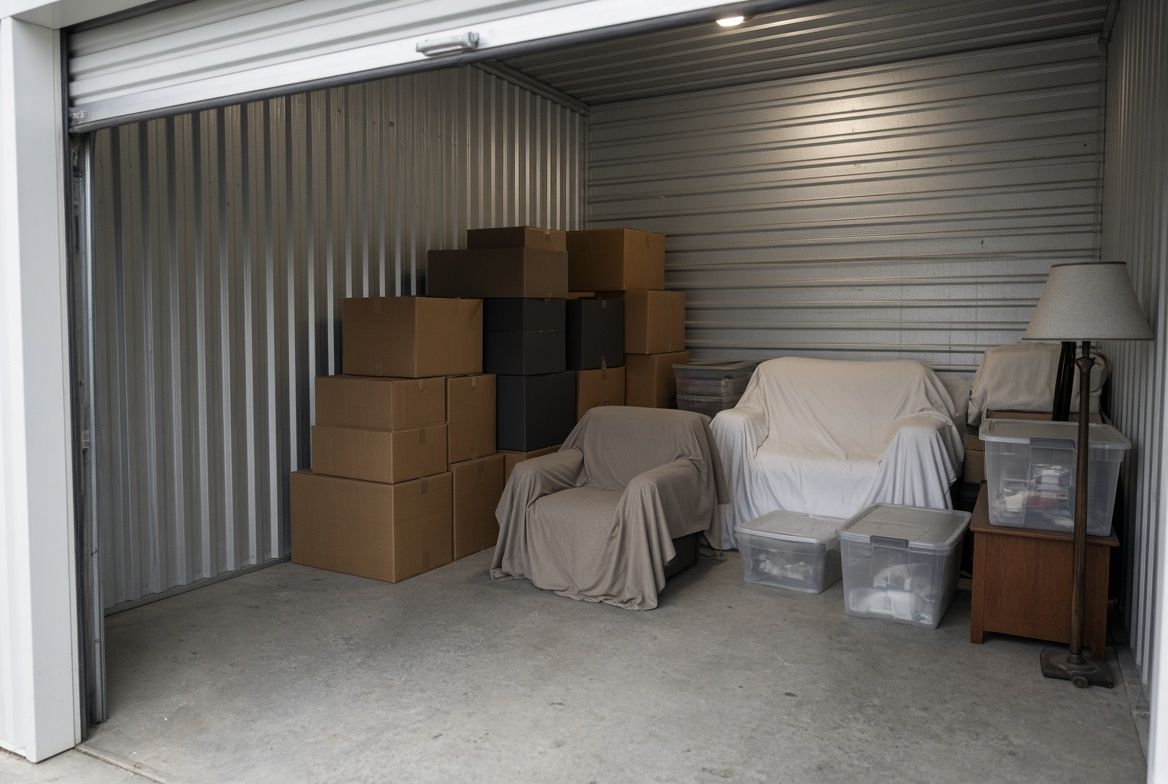
For suitable materials that are not yet required, secure storage units in Peterborough can provide additional space away from the immediate working area. Peterborough Storage offers 20ft x 8ft containers with drive-up access, making the homepage a relevant internal destination for readers considering general storage capacity.
The practical benefit comes from coordinating storage with the programme of works. Materials can remain off site until they are approaching the stage at which they will actually be used, rather than arriving months in advance and occupying working space.
This should still be balanced against delivery schedules, supplier requirements and the risk of introducing delays by storing essential materials too far from where they are needed.
Check Restrictions on Hazardous Materials
Construction projects involve many products that should not automatically be placed in general self storage.
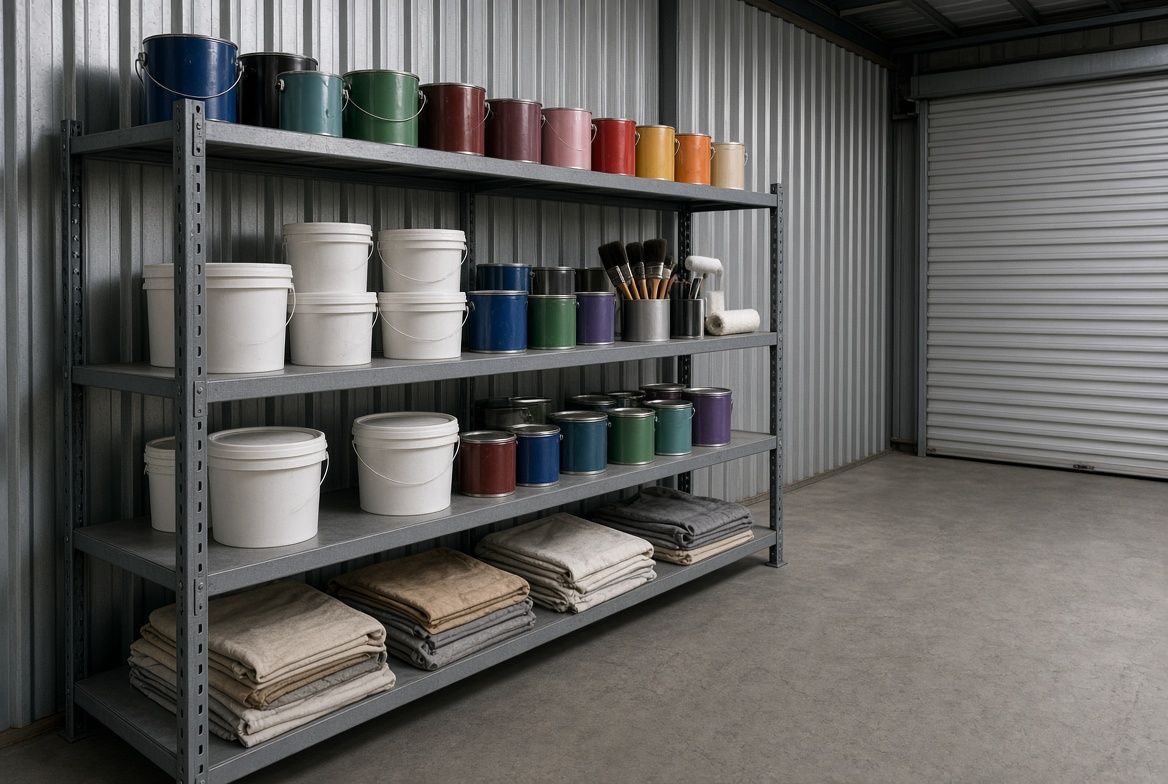
Fuels, gas cylinders, flammable liquids, certain chemicals and other hazardous or restricted substances may be prohibited. Paints, adhesives, treatments and aerosols can also have specific storage requirements.
Always check the storage provider's terms before bringing potentially hazardous materials onto the premises. Product labels, manufacturer guidance and Safety Data Sheets should be followed where applicable.
If a product requires controlled environmental conditions or specialist safety measures, ordinary self storage may not be appropriate.
This distinction is important because a storage solution suitable for boxed fixtures or tools is not automatically suitable for every substance found on a building site.
Maintain a Simple Stock Record
Once materials are moved away from the project, it becomes easier for teams to lose track of what has already been purchased.
A basic inventory can prevent unnecessary repeat orders.
Record the product, quantity, project allocation and approximate location within storage. Where relevant, include product references or batch information.
The system does not need to be complicated. A shared spreadsheet may be sufficient for a smaller contractor, provided it is updated when materials enter or leave storage.
For multiple projects, clearly allocating stock is especially important. Ten boxes of the same product may look interchangeable, but some may have been purchased specifically for a job with different specifications or cost allocations.
Plan Collections Around the Programme of Works
Storage works best when it is connected to the construction schedule.
Rather than collecting materials reactively, review upcoming work and identify what needs to reach site next. This can help reduce unnecessary journeys and prevent materials being taken to site long before there is space for them.
Frequently required items should remain accessible within the unit. Products for later stages can sit further back, provided the layout allows them to be retrieved safely when required.
Where several trades collect materials, clear communication is essential. Everyone should understand which stock is allocated to which project and what can be removed.
This is also where an accurate inventory becomes valuable: the team can check availability before travelling to the storage facility.
Review Surplus Materials at the End of Each Project
Finished projects often leave useful materials behind, but they can also generate stock that has little realistic future value.
Review leftovers before automatically transferring everything into long-term storage.
Standard fixings, unopened general materials or commonly used products may be worth retaining. Highly project-specific items are less straightforward and should be assessed individually.
Any product being kept should be clearly identified. Unlabelled offcuts and half-empty boxes become increasingly difficult to recognise as time passes.
Regularly clearing obsolete stock also preserves capacity for future projects, making the storage space more useful rather than allowing it to become a permanent archive of construction leftovers.
Make Storage Part of Site Logistics
Effective material storage is ultimately about getting the right products to the right place at the right stage of a project.
Off-site space can help reduce congestion, protect suitable materials and make stock easier to control, but only when there is a clear system behind it. Materials should be separated by project, stored according to their requirements and positioned with safe handling in mind.
Contractors should also know what they have in storage and when it will be required. Linking the inventory and collection schedule to the programme of works can prevent both unnecessary site clutter and forgotten stock.
With that approach, storage becomes more than somewhere to put excess materials. It becomes part of the logistics that help a building project progress in an organised and efficient way.